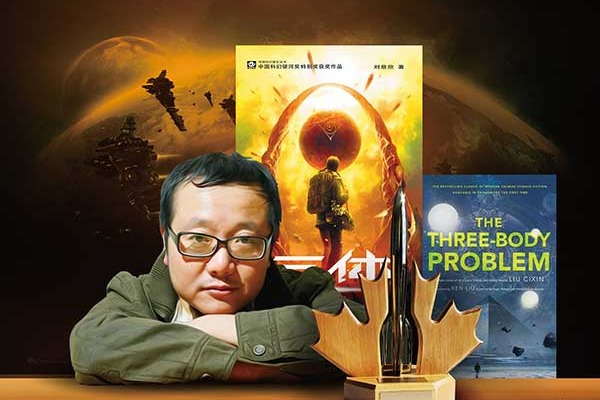
The Three-Body Problem Trilogy
Overview of the Trilogy
The Three-Body Problem Trilogy takes readers on an expansive journey that begins in the 1960s and extends into a distant future where the fate of humanity hangs in the balance. The series delves into complex themes involving the nature of civilization, the limits of human understanding, and the vastness of the universe. The narrative unfolds through a rich tapestry of characters and settings that traverse both time and space, offering readers an unprecedented perspective on the challenges and consequences of encountering an extraterrestrial species. The trilogy is renowned for its rigorous scientific grounding, philosophical depth, and the profound questions it raises about technology and existence.
Plot Summary
The Three-Body Problem
The first novel in the trilogy, The Three-Body Problem, introduces readers to the enigmatic concept of the "three-body problem" in physics, which serves as a metaphor for the unpredictable and chaotic nature of human interactions with an alien civilization. The story begins with a secret project that sends signals into space in a quest to establish contact with extraterrestrial intelligence. This effort inadvertently attracts the attention of the Trisolarans, an alien race facing extinction due to the unstable orbits of their three suns. As the Trisolarans prepare for their impending invasion of Earth, humanity is left grappling with the realization of its own insignificance in the universe.
The Dark Forest
In The Dark Forest, the focus shifts to the impending arrival of the Trisolaran fleet, which is set to reach Earth in four hundred years. Humanity is thrust into a state of collective paranoia, as the potential threat of the aliens looms ever closer. In response, a global strategy is devised, led by key figures tasked with devising a plan to ensure the survival of the human race. The novel introduces the "dark forest theory," a philosophical premise that posits the universe as a dark forest where civilizations are hunters, and any form of communication equates to revealing one's location to potential enemies. This concept serves as a metaphor for the existential perils of contact with extraterrestrial life.
Death's End
The final installment, Death's End, extends the trilogy's exploration of cosmic themes to their ultimate conclusion. The narrative spans eons, charting the evolution of human civilization in response to the looming Trisolaran threat. As the boundaries between human and alien blur, the protagonist Cheng Xin emerges as a central figure in navigating an increasingly complex and precarious universe. The novel challenges readers to confront the implications of the dark forest theory and the existential questions it raises about survival and coexistence. Ultimately, Death's End offers a profound meditation on the nature of life, the universe, and the fate of civilizations.
Major Themes
The Three-Body Problem Trilogy is rich with themes that resonate on both a scientific and philosophical level. Central to the series is the exploration of humanity's place in the cosmos, the limits of scientific understanding, and the moral and ethical dilemmas faced when encountering an alien civilization. The trilogy delves into the tension between hope and despair, the pursuit of knowledge, and the consequences of technological advancement. The dark forest theory, introduced in The Dark Forest, serves as a chilling metaphor for the isolationist tendencies of civilizations and the inherent risks of intergalactic communication. These themes offer readers a thought-provoking inquiry into the nature of existence and the potential futures of humanity.
Characters
The characters in The Three-Body Problem Trilogy are complex and multifaceted, each offering unique perspectives on the series' central themes. Key figures include Ye Wenjie, whose actions set the events of the trilogy in motion; Wang Miao, an everyman thrust into extraordinary circumstances; Luo Ji, the reluctant hero tasked with devising a defense against the Trisolarans; and Cheng Xin, whose compassionate leadership becomes a focal point in the series' final installment. The interactions among these characters, along with the diverse array of supporting roles, underscore the human element in a narrative dominated by cosmic forces.
Setting and Background
The trilogy's setting spans both Earth and the far reaches of the universe, offering a diverse array of environments that serve as backdrops to the unfolding drama. The series presents a vivid tapestry of locations that enhance the narrative's scope and depth. The scientific rigor underpinning the trilogy is evident in its detailed depictions of astrophysics, quantum mechanics, and advanced technologies, grounding the fantastical elements in plausible scenarios. This commitment to scientific authenticity is a hallmark of Liu Cixin's work and contributes to the trilogy's enduring appeal.
Reception and Impact
Since its publication, The Three-Body Problem Trilogy has received widespread acclaim from readers and critics alike. It has been credited with popularizing Chinese science fiction on a global scale, earning accolades such as the Hugo Award for Best Novel, a first for an Asian author. The series has garnered a diverse international readership, including high-profile fans like Barack Obama and Mark Zuckerberg, who have praised its imaginative scope and thought-provoking narrative. The trilogy's success has spurred increased interest in Chinese science fiction and inspired a new generation of writers and readers to explore the genre.
Adaptations
The trilogy's impact extends beyond literature, as it has been adapted into various media formats, including graphic novels, radio plays, and an upcoming television series produced by Netflix. These adaptations aim to bring Liu Cixin's vision to life for a broader audience, capturing the intricate world-building and philosophical depth of the original novels. The challenge of translating the trilogy's complex narrative to screen has been met with creative solutions, utilizing cutting-edge technology and storytelling techniques to convey the grandeur and intricacies of the source material.
Author and Publication History
Liu Cixin, a prominent figure in Chinese science fiction, is the creative force behind The Three-Body Problem Trilogy. Born in 1963, Liu's background in engineering informs his writing, imbuing his work with scientific authenticity and precision. The trilogy was originally serialized in China, with the first novel published in 2006. The English translation of The Three-Body Problem, by Ken Liu, was released in 2014, propelling the series to international acclaim. Liu Cixin's contributions to science fiction have been recognized with numerous awards, cementing his status as a leading voice in the genre and a pioneer of Chinese literature on the global stage.








